
 English
 Español
 Portugues
 Pусский
 Français
 한국어
한국어 العربية
 Italiano
 Svenska
 Polski
 ไทย
ไทย Türk dili
 हिन्दी
 Tiếng Việt
 中文
中文 dansk
dansk қазақ
қазақ বাংলা
বাংলা فارسی
فارسی українська
 беларускі
 Suomalainen
 o'zbek
 Србија
 پښتو
پښتو საქართველოს
 Shqipëria
 Afrikaans
 Kikongo
PVC-Innendrahtform
PVC Inner Wire Mold: An Overview PVC inner wire molds are specialized tools used in the manufacturing of PVC-coated wires and cables. These molds play a critical role in ensuring the precise application of PVC insulation around conductive wires, providing uniformity, durability, and electrical insulation. The design and functionality of these molds directly impact the quality, efficiency, and performance of the final product. Function and Importance The primary function of a PVC inner wire mold is to shape and control the extrusion of molten PVC material around the inner conductor. During the extrusion process, the molten PVC is forced through the mold, which forms a consistent, smooth layer over the wire. This layer acts as an insulator, protecting the conductor from environmental factors such as moisture, heat, and mechanical stress. A well-designed mold ensures: - Uniform Thickness: Prevents uneven insulation, which could lead to weak spots or electrical failures. - Smooth Surface Finish: Reduces friction during installation and enhances durability. - Precise Diameter Control: Maintains compliance with industry standards for wire dimensions. Design and Materials PVC inner wire molds are typically made from high-grade steel or carbide materials to withstand high temperatures and pressures during extrusion. The mold consists of several key components: 1. Tip (or Nose): Guides the conductor into the mold. 2. Die: Shapes the outer diameter of the PVC coating. 3. Adjustment Mechanism: Allows fine-tuning of the coating thickness. The mold’s internal geometry is carefully engineered to ensure smooth material flow, minimizing defects like air bubbles or uneven surfaces. Manufacturing Process The production of PVC-coated wires involves: 1. Preheating the Conductor: Ensures better adhesion of PVC. 2. Extrusion: Molten PVC is pushed through the mold, coating the wire. 3. Cooling: The coated wire passes through a water bath to solidify the PVC. 4. Quality Inspection: Checks for thickness, smoothness, and insulation integrity. Applications PVC inner wire molds are widely used in industries such as: - Electrical Wiring: For household and industrial cables. - Automotive: Insulated wiring for vehicles. - Telecommunications: Coaxial and fiber optic cables. Advantages - High Precision: Ensures consistent product quality. - Durability: Resistant to wear and corrosion. - Efficiency: Optimizes production speed and reduces material waste. Conclusion PVC inner wire molds are essential in producing high-quality insulated wires. Their precise design and robust construction contribute to efficient manufacturing, ensuring reliable performance in various applications. Continuous advancements in mold technology further enhance production capabilities, meeting the growing demands of the wire and cable industry.
Produkt
Kategorie:
-
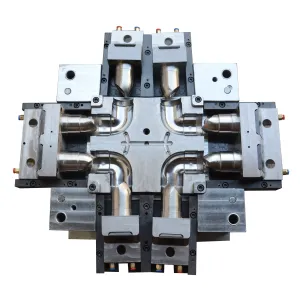
Form für 90°-Winkelrohrverschraubung aus PVC
Ihre Klassifizierung: PVC-RohrverbindungsformAnsichten: 482Nummer:Veröffentlichungszeit: 2025-10-27 22:02:37PVC 90°-Winkel-RohrverbindungsformFormname:PVC-Rohrverbindungsform für 90°-WinkelHohlraum: 4 HohlräumeFormgröße: 50–110 mmFormstahl: Deutschland 2316, China 2316 oder 4cr13 für Hohlraum und KernTor: direktes TorFormstruktur: WinkelstiftHärte des Kerns/Hohlraums: HRC 40–45 °Grad nach Vakuumwärmebehandlung Spritzgießmaschine: 320 TTaizhou Huangyan Hong Jin Mold Co., Ltd wurde 2002 gegründet. Wir sind seit mehr als 23 Jahren professionell in der Entwicklung und Herstellung von Rohrverbindungsformen.Wir freuen uns auf eine lange Zusammenarbeit mit Ihnen.Im Folgenden finden Sie die wichtigsten Info...
Nachrichten
Kategorie:
Keine Suchergebnisse!
Fall
Kategorie:
Video
Kategorie:
Keine Suchergebnisse!
Herunterladen
Kategorie:
Keine Suchergebnisse!
Rekrutierung
Kategorie:
Keine Suchergebnisse!
Empfohlene Produkte
Keine Suchergebnisse!




 WhatsApp
 Telefon